
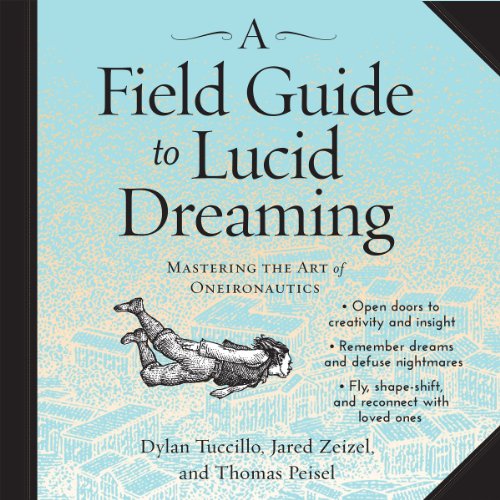
“A Field Guide to Lucid Dreaming” is an engaging and practical book that serves as a comprehensive guide to exploring the fascinating world of lucid dreaming. Co-authored by Dylan Tuccillo, Jared Zeizel, and Thomas Peisel, this book combines scientific insights with personal anecdotes, offering readers a step-by-step approach to mastering the art of lucid dreaming.
OPENING THOUGHTS
After the only time I have managed to be conscious of being in a dream (and getting up right away), I have always been amazed by lucid dreaming. I have already tried to watch some YouTube videos about this subject, but I think that reading a detailed book about it will be much more efficient. Knowing that the average person spends about six years sleeping in their lifetime, I hope that I will be able to get the most out of this time and to dive into the fascinating world of lucid dreaming.
PART ONE: Starting the journey
1) A New Discovery
- A lucid dream is one in which you become aware that you’re dreaming
- In 1975, scientists Keith Hearne and Alan Worsley were the first to prove that we can be consciously awake inside our dreams
- The diaphragm and the eyes are the only parts of the body that remain unaffected of the body paralysis during a lucid dream
- Conscious dreaming is an actual provable experience
- Lucid dreams are triggered by something that suddenly causes the dreamer to stop and question their reality
- In a lucid dream, you are able to think logically, make decisions, and explore the dream’s landscape
- It’s a place that seems real but is really just a projection of the mind (The Matrix)
- The ability is not something you have to acquire, it’s something you already possess
- You just need to recognize the dream state
- When you start to lucid dream, you understand that there is much more to reality than what we currently understand and that they can be the best experiences that we can have
- Benefits of lucid dreaming:
- Adventure and Fantasy: Perfect playground for your fantasies to run free (I know that you’re thinking about sex)
- Facing Nightmares: They can be messages that your subconscious try to tell you
- Creativity and Inspiration: You can create pretty much anything you want
- Creative Problem Solving: A way to try out new skills. Testing ground
- Healing: Ilnesses can sometimes result from an emotional or spiritual imbalance
- Self knowledge: Soul-searching
2) What Are Dreams?
- Before becoming lucid, you need to understand the nature of dreams
- ‘Dreaming ties all mankind together’ – Jack Kerouac
- We dream for about two hours each night, an average of six years spent dreaming in a life time
- We still don’t know what are exactly dreams and why do we dream, no single consensus has been made
- Modern psychology has been trying to uncover the secrets of dreaming thanks to Sigmund Freud
- Freud claimed that all dreams are forms of wish fulfillment
- They originate from our repressed conflicts and desires accumulated throughout life
- Our ‘uncounscious‘ mind attempts to resolve these past conflicts
- Science is still figuring out the exact purpose and fonction of sleep itself (!)
- Some main ideas of why we dream:
- Organise information and store memories
- Make connections among different thoughts and emotions
- Dreams have no sense (activation synthesis model) and are just the brain’s reaction to biological processes that occur during sleep 😦
- The remembered dream is not the dream itself
- The memory is nothing compared to the actual experience
- When we dream, we go into our subconscious
- Subconscious: part of our minds that’s responsible for anything other than conscious mental activity
- It’s hidden but still well within our reach
- Much larger than the conscious mind
- Influences our decisions, thoughts, and feelings
- Source of our imagination
3) A History of Dreaming
- Shamanic cultures believed that dreams are a key to realities hidden from our five senses and that many subtle worlds exist parallel to the physical one
- Many indigenous cultures believed that someone who is not in touch with their dreams is not in touch with their soul
- Dreams and cultures:
- Sumerians
- The king Gilgamesh used dreams as a way to guide his decisions in the walking world
- Ancient Egyptians
- Believed that dreams have a direct connection to the spirit world
- They appear to have practised a form of lucid dreaming and even shape-shifting and time traveling
- Ancient Greeks
- Saw dreams as a connection to the divine
- They have built hundreds of shrines serving as dream temples, involved with dream healing, where the sick could come to heal physically, emotionally, and spiritually
- Plato theorized that dreams are the expression of our repressed desires (2000 years before Freud)
- ‘In all of us, even the most highly respectable, there is a lawless wild beast nature, which peers out in sleep.’
- Artemidorus was the first to take the individual’s personal backround into dreams
- Romans
- Took inspiration of the ancient Greeks and Egyptians
- Dreams incubation and temples
- More and more Romans were converted to Christianity. Dream interpretation was refocused through the lens of the Bible
- Hindus
- Everything around us, in the physical world, is a dream happening in Vishnu’s mind, our world will end when the god’s dream ends
- We ourselves are only manifestations (dream characters)
- ‘Dreaming gives us a glimpse of the god who creates us by dreaming into existence.’
- Hindu believe that dreaming is a higher state of consciousness than the waking state
- Tibetans
- Dream yoga
- They were the pioneers of lucid dreaming, described specific techniques for achieving lucidity and training consciousness
- Had to complete number of tasks, progressing to higher levels of their practice
- Yogis’s ultimate goal is to achieve the absolute purest form of conscious awarness
- Chinese
- Realm of the dead and the spirits
- Divided the soul into two parts: p’o (material soul) and hun (spiritual soul)
- Hebrews
- Several clues to a dreaming culture throughout the history of the Hebraic culture
- ‘Dreams which are not understood are like letter which are not opened’
- Considered as a direct way to receive guidance from God
- Indigenous Tribes
- Everything around us contains spirit and we access this spirit realm when we dream, not limited by space of time
- Dreaming is a social activity
- Dream visitors
- Dreams were a source of guidance not only for the individual, but also for an entire community and used in hunting, healing, and war
- European Middle Ages
- Spreading of Christianity
- There are hundreds of dreams in the Bible alone
- Dreams were looked on as evil and sinful, divine messages could only be received through the church
- Modern Times
- Dreams comming out of the darkness thanks to Dr. Sigmund Freud
- He started an entire branch of psychology devoted to unlocking the ‘uncounscious’ minds through dreams interpretations
- Freud’s student Carl Jung believed that dreams were not only about the past, but also about the present and that they show us what we are striving to achieve and what stands in our way
- Sumerians
PART TWO: Packing your bags
- Before lucid dreaming, you first need to remember your dreams, learn the art of a good intention and build a healthy suspicion of reality
4) The REM Stage
- The stage of sleep where dreams occur
- 1950s: Eugene Aserinsky and Nathaniel Kleitman were the first to discover the characteristics of this phase
- Quick heart rate and breathing
- Blood pressure rising
- The brain would turn into an active state
- Dreaming occurs during a specific time within sleep
- The two scientists named it Rapid Eye Movement (REM)
- REM sleep and wakefulness have similar brain states
- The major difference is in the sensory stimuli coming in
- During the day, our sensory input is coming from the external world, when we dream it is turned inward and our thoughts and memories become the active agents in creating our experience
- Stages of Sleep
- Stage 1: brigde between waking and dreaming stage. Hypnagogic imagery and hypnic jerks
- Stage 2: body’s prep stage. Heart rate and core temperature going down
- Stage 3: repair mode. Body rebuilding muscle and bone mass, organs and tissues, immune system streghtening
- REM stage: dream zone
5) The Power of Intention
- People often have their first lucid dream just after discovering the existence of it
- Once we know we look for something, it is easier to find it
- An intention is a purpose, a goal and a directed thought toward a specific action. It is filled with passion
- Without intentions, we wander meaninglessly and without direction
- With complete self-reflection and conscious freedom, you can do anything you want
- The better the intention, the less space there is between you and your goals
- The electrical impulses of when we visualize and when we actually do smothing are the same
- Lucid dreamers are often confident and playful
- Many youngsters are talented dreamers because they don’t recognize their own limits
- We need to focus on creating and imagining instead of doubting our abilities
You can have anything you want if you want it desperately enough. You must want it with an inner exuberance that erupts through the skin and joins the energy that created the world.
– Sheila Graham
- How to set an intention
- Wording: an intention should be highly specific. Short, powerful statements focusing on your desire (affirmations) . Clear and direct. Preferably in present tense as if it has already occured, doing so eliminates any doubt that your wish will come true
- ‘I am lucid and aware in my dream.’
- Visualize: words are meaningless unless you actually feel them. Picture your desire and imagine yourself in a dream and realizing that you’re in it. Think of a recurring dream. Engage all five senses
- ‘I will become lucid in my dreams tonight’
- Expectation: expect to wake up in your dream tonight
- Dominant thought: last thing you think about before going to sleep
- Wording: an intention should be highly specific. Short, powerful statements focusing on your desire (affirmations) . Clear and direct. Preferably in present tense as if it has already occured, doing so eliminates any doubt that your wish will come true
- Feeling grateful before something happens is a very powerful and creative force
- It has already happened in your mind and eliminates any stress and fears that come with the unknown
- Confidence, expectation and intention
6) Remembering your dreams
- Before becoming lucid, you need to have a solid relationship with your dreams and remember at least one of them each night
- Lost dreams are lost wisdom and guidance
- The more you remember your dreams, the more you will have them
- Remember the power of words and beliefs are (ex. saying that you never dream)
- Dreams are real experiences similar to the events and actions in our waking world, so does our memories related to them
- Set an intention to remember your dreams before bed
- Affirmation (I remember my dreams)
- Visualize: picture yourself recalling your dreams in the morning and writing them in your dream journal (vivid experiences and details)
- Feel it
- Set healthy sleeping habits
- Nighttime rituals: hot shower, read, meditate, stretch, draw… Limit screens
- Bed time: consistent sleep cycles
- Create a private and comfortable sanctuary in your bedroom
- Limit alcohol, tobacco, marijuana, coffee, etc…
- Waking up is an important aspect of dream recalling
- Wake up slowly and motionlessly: before doing anything, have some time to remember the dream you were just in, recall everything you can
- Collect fragments: associations, ask yourself what can you remember
- Switch sleeping positions
- Become aware of your emotions: great indicator of the kind of dream you had
- Write them down
- Dream recall is associated with opening up to your dreams
- Become more prone to absorption, imagination and fantasy
- Value your dreams as important experiences that you want to remember
7) Keeping a dream journal
- Great explorers always keep a log of their adventures
- Keeping a dream journal is about recounting the story of one’s experiences from a completely other world
- You can see things about yourself that you normally dismiss (ex. health issues, relationships…)
- We typically forget 50% of our dreams within 5 minutes of waking up and 90% within 10 minutes
- Writing your dreams is a way to tell your subconscious that they are important and must be remembered
- How to keep a journal
- Get a nice-looking journal
- Keep it next to your bed
- Before going to bed, write the date and the bedtime
- If you are in a rush, write keywords that you can later expand on
- Write in the present tense so you recall more details
- Title your dreams
- Note wether you were LUCID
- Write down what triggered your lucidity, how long it lasted, what you did and tips that will help with the next lucid dreams
- The value of keeping a dream journal exceeds the effort put into keeping one
- ‘A dream is an answer to a question we haven’t learned to ask.’
- They reveal to us insights about ourselves and our lives
- The dream belongs to the dreamer, they are very personal and intimate things
- The calmer you are before bed, the clearer the memories of your dreams will be when you wake up
- We often dream about very similar things
- They act as landmarks in the dream world and a great way to achieve lucidity
- Underlign reccuring objects, places, people and themes
- Ex. ‘The next time I see my ex, I will realize that I am dreaming.’
- Imagine that you are crafting a book of tales from a completely different dimension. The log of a pioneer
- HAVE FUN !
8) The reality check
- The multisensory experience, the authenticity of emotions, the solidity of surroundings… those factors make dreams difficult to differ from reality
- Examples of reality checks
- Passing your finger through your palm
- Counting your fingers
- Jumping
- Holding your nose
- Checking your reflection in a mirror
- Reading
- Tips to often perform your checks
- Set an alarm/reminder on your phone every hour
- After every meal, every time you walk through a doorway, when you answer your phone, etc…
- Use dream signs
PART THREE: Arrival
- Stay focused and relaxed, and the dream will come to you
9) Becoming Lucid
- 72% of lucid dreams tend to happen thanks to a DILD (Dream-Initiated Lucid Dream)
- Lucid dreamers often focus on the last two stages of REM (the stages just before waking up)
- They are the longest stages – around fifty minutes each
- You’ve already passed the deep sleep, now your body is still resting but your mind still good for dreaming
- Easier to remember dreams
- Tips to catch your last REM cycle
- Setting up an alarm six hours after bedtime
- Stay up for twenty minutes
- Awakens your left brain – the analytical half of your mind
- As you fall asleep, tell yourself that you are aware of dreaming
- Sleeping on your back may be beneficial to lucid dream
- Visualize yourself in a dream
10) Staying lucid
- Trying to stay lucid is like to tame a feral horse – unless you control it it’ll get away from you
- Engage the dream but never forget that you’re dreaming
- When to anchor your dream
- In the first moments upon becoming lucid
- When the dream is starting to fade
- You can also randomly pause in your dream to keep your level of awarness high
- Stabilization techniques
- Stay calm. Relax. Take a deep breath
- Spinning (introduced by Stephen LaBerge)
- Information on balance and movement are closely related with visual information
- Stay engaged, don’t be passive
- Balance between engaging in the dream and being aware that you’re dreaming
- Touch something, engage any of your 5 senses
- Command the dream (‘stabilize!’ ‘clarity!’)
- Meditate (mind blowing)
PART FOUR: Exploring a new world
11) Transportation
- The laws of space and time (everything exists in one big eternal now) do not apply to the lucid dreamer. Getting from point A to B is only a matter of intention and focus
- Takeoff and flying
- Take it slow, ground yourself
- Believe you can fly and you can, fear that you’ll fall and you will
- Various flying techniques: superman, swimmer, owl, bounce…
- Land slowly, like an airplane would
- Other methods of traveling include teleportation, gateways, walking through walls, time travel…
12) Creation
Life isn’t about finding yourself. Life is about creating yourself.
George Bernard Shaw
- Creation is at the core of the human spirit
- We differ from other animals in our capacity to create and forge new ideas through our will and imagination
- You can create anything in a lucid dream
- Creation principles
- Thoughts and emotions create your reality – influences the environment around you
- The dream world mirrors your own beliefs and expectations
- Everything in your dream is a reflection of your own self
- Whathever you want to create, or whoever you want to meet, our logical brain operates through cause and effect
13) The Natives
- Every native have a different level of awareness
- Some are conscious of what’s going on, some have messages to deliver, some can act like friends, guides, or some can be simply wandering aroung willy-nilly
- Common natives: the sleepwalker, the friend, the guide…
- You should always try to interact with them. Most of the time, they have amazing knowledge and wisdom
- Don’t waste your time with small talk. Ask some deep, meaningful questions
- Every dream character is a part of yourself. Treat them the way you want to be treated
14) Superpowers
- ‘What we think, we become’ Buddha
- Examples of dream superpowers
- Shape-shifting
- Telekinesis (remember that there is no real separation between you and the object, your dream is a projection of your own self)
- Energy ball
- Do not forget to work with cause and effect
PART FIVE: Mastering the terrain
15) Defusing Nightmares
- 5 to 10 percent of adults have at least one or more nightmares a month
- Nightmares reflect how we are feeling in our waking life, mentally and physically (stress, illness, traumatic events…)
- Carl Jung believed that nightmares are a reflect of our unconsciously rejected, disowned or denied aspects of our psyches
- Accepting, acknowledging and integrating them in our psyches puts us on a path of becoming whole and balanced
- The longer our nightmares stay hidden in our subconscious, the more damage they’ll do
- Nightmares are good to trigger lucidity
- The only way to get rid of a nightmare, is to face it
- Your subconscious is not going to quit until it has delivered it
- You are battling a part of yourself
- Release positive and loving feelings toward your nightmare
16) Healing and Wholeness
The power which a man’s imagination has over his body to heal it or make it sick is a force which none of us is born without. The first man had it ; and the last one will possess it.
Mark Twain
- Your body cannot differentiate between a thought and a real-life event
- ‘The mind lives in every cell of the body‘, Candace Pert
- According to Abraham Maslow, the main goal of any therapy is integration
- Psyche becomes whole
- Many mental problems seem to happen when we are repressing parts of ourselves (mental blockages)
- Fun fact: in Old English, healing means ‘to make whole’
- If our minds are powerful enough to make ourselves sick, we’re powerful enough to make ourselves well
- Our physical symptoms are often a result of an emotional or spiritual imbalance
- Carl Jung: there is often a connection between an undoubted physical illness and a definite psychic problem
- Healing in dreams can be made by various technics like the ‘colored light’, the ‘voodoo doll’, or seeking out an animal or a human to do the healing for you (remember the power of intention)
17) Dream Incubation
- Dream incubation allows you to set the stage for your dream before bed
- All you need is a solid intention. Put some heart in it, your subconscious can tell if it is not geniune
- Remember that the message that your dream is conveying to you cannot be summarized in specific langage
- Sometimes, our dreams answer questions that we should have asked
18) WILD
- Shamans and yogis have practiced this approach for thousands of years
- WILD = Wake Initiated Lucid Dream
- Going from the waking state directly into a lucid dream without any lapse in consciousness
- Falling asleep consciously
According to Russian physicist Arkady Migdal, this intermediate state, ‘where consciousness and unconsciousness mix’ is the optimal state for creativity.’
- Info on how to perform a WILD on page 223
PART SIX: The next frontier
- Freud was convinced that there is a deeper part of ourselves that contains our repressed memories, underlying thoughts, beliefs and emotions
- Pulling them out of our subconscious and introducing them into our conscious minds is an amazing way to learn more about ourselves and become whole
- Lucid dreaming allows us to engage with the Self
- ‘What is necessary to change a person is to change his awareness of himself’ Abraham Maslow
19) Waking vs. Dream
Thoughts are things, and powerful things at that, when they are mixed with definiteness of purpose, persistence, and a burning desire.
Napoleon Hill
- ‘We are all one’ – this statement is even more relevant in our dreams, where litterally everything is imbued with a consciousness
- Separation is an illusion
Lucid living
Some of us go through the motions of life automatically. We fill our days with routines and errands. Our buzzing minds are anxious about the future or regretful about the past. We let others dictate our reality, letting life chug on by like a runaway train. It’s as if we’re in a dream, wandering aimlessly in a kind of sleepy trance.
P. 245
- The goal of lucid dreaming is not to sleep away your life, but to bring this increased awareness into your everyday existence.
- Being so vividly engaged with life that your past seems like a hazy dream
- Just like we do in dreams, we shape our experiences with our thoughts, emotions, and expectations
- When you know what you want, it will be a lot easier to obtain it
ENDING THOUGHTS
I very much enjoyed this book. Not only have I learned a ton of things that I could never imagine about lucid dreaming, this book also makes you learn more about yourself. While I still have not managed to lucid dream (yet), I am looking forward to integrate the teaching of this book thouroughly.


 YAZ LOGS
Leave a reply to camilla wells paynter Cancel reply